Image


Arcom ensures that TV channels make their programs accessible to people with hearing or visual impairments.
We also carry out awareness raising and incentive initiatives concerning the integration and training of people with disabilities in the audiovisual media, the development of accessibility quality and the qualitative improvement of on-air representation of disability and people with disabilities.
Since the 2005 law, channels have been required to offer programs accessible to people with disabilities.
In concrete terms, what do channels have to do?
Offer programs in audio description, subtitling in all programs for public channels, as well as subtitled programs for private channels with an audience share of over 2.5%, and subtitled programs for other approved channels. Arcom encourages channels to go beyond their legal obligations.
2008: Audiodescription Charter.
2011: Subtitling quality charter.
2015: Quality charter for the use of French sign language.
2020: Audiodescription Guide.
Since 2020, the "AVMS" directive has paved the way for obligations for certain video-on-demand services.
In addition to accessibility, Arcom is encouraging publishers to take greater account of disability issues in their programs.
Finally, the Authority invites media companies to commit to the integration and training of disabled people in audiovisual communication.
Disability reports
Charters on disability
Studies
Currently being deployed in the UK and Spain, vocalization enables all textual information normally displayed by the receiver on the TV screen to be rendered in the form of a voice message. For example, the receiver's configuration menu, channel name and number, electronic program guide data and audio track are all shown through the receiver's built-in loudspeakers.
Associations for the blind and visually impaired have noted the lack of adapted DTT receivers in France. As a result, the French Superior Audiovisual Council (which became Arcom on January 1, 2022) carried out a study with the Mediatvcom company, with the aim of eventually developing and marketing a DTT receiver that could vocalize in French.
Translated into reports, this study has enabled us to :
Report 1: Status of the development of voice-activated DTT receivers.
Report 2: Functional and technical specifications for a vocalizing DTT receiver (French version).
In terms of subtitling, Arcom's mission derives from Law no. 2005-102 of February 11, 2005 on equal rights and opportunities, participation and citizenship for the disabled, which added several paragraphs to Law no. 86-1067 of September 30, 1986 on freedom of communication.
In addition, article 20-6 of the law of September 30, 1986, created in December 2020 as part of the transposition of the new European AVMS directive, stipulates that in addition to the volume of accessible programs, Arcom must ensure the quality of this accessibility. While this aspect is now enshrined in law, the Authority has long taken account of the public's needs in this area, and in 2011 signed a charter on the quality of subtitling.
The proportion of programs that must include subtitling depends directly on the audience of each channel: channels with an audience share of over 2.5% of the total audience for TV services, as well as services published by public audiovisuel companies, must subtitle all their programs, while for terrestrial channels with an audience of less than 2.5% of the total audience for TV services, an agreement signed with Arcom sets the proportions of accessible programs.
Arcom has endeavored to reconcile the demands of the deaf and hearing-impaired with the difficulties faced by broadcasters, by proposing innovative solutions for certain channels:
In accordance with the law, France Télévisions channels France 2, France 3, France 4, France 5, and TF1, Canal+, M6, C8, W9 and TMC are required to subtitle all their programs, excluding advertising and exceptions.
Programs accessible in 2021 for channels with an audience share of over 2.5% of the total audience for TV services (hourly volumes and percentages, excluding advertising and exemptions).
| Channel | Annual volume available (in hours) | Realized as % of total volume |
| France 2 | 7731 | 99,9% |
| France 3 national | 6791 | 100% |
| France 4 | 8455 | 100% |
| France 5 | 8076 | 100% |
| TF1 | 6746 | 100% |
| Canal+ | 7489 | 100% |
| M6 | 6854 | 100% |
| C8 | 6439 | 100% |
| W9 | 7113 | 100% |
| TMC | 6494 | 100% |
Programs accessible in 2021 for channels with an audience share of less than 2.5% of the total audience for TV services (hourly volumes and percentages, excluding advertising and exemptions).
| Channel | Subtitling obligation in 2021 | Annual volume available (in hours) | Achieved as % of total volume |
| Free DTT channels | |||
| TFX | 60% | 5730 | 85,1 % |
| NRJ12 | 45% | 3014 | 48,6 % |
| Cstar | 35% | 2757 | 37,4 % |
| Gulli | 30% | 4411 | 56,8 % |
| TF1 Séries Films | 40% | 6681 | 91,8 % |
| L'Equipe | 40% | 3271 | 42 % |
| 6Ter | 60% | 6490 | 91,3 % |
| RMC Story | 50% | 3792 | 52,4 % |
| RMC Découverte | 40% | 3421 | 47,6 % |
| Chérie 25 | 50% | 3862 | 61,6 % |
| DTT pay-TV channels | |||
| Canal+ Cinéma | 50% | 7253 | 91,3 % |
| Canal+ Sport | 40% | 2682 | 43,2 % |
| Paris Premiere | 45% | 4122 | 58,9 % |
| Planète + | 45% | 3670 | 46,8 % |
If the average annual audience for these channels exceeds 2.5% of the total audience for TV services, the subtitling obligation will rise to 100%, in accordance with the law.
Not all programs are required to be subtitled, but exceptions are possible.
To enable deaf or hard-of-hearing people to find out which programs are accessible to them, the availability of subtitles must be indicated.
However, the presence of subtitles in reception may come under the control of the adapter or decoder in question.
Arcom can show you the availability of subtitles on your distributor's network, based on the receiver used for these observations. Visit the appropriate online service:
Subtitling on television has been in use for several decades. There is a difference between translating programs or films into their original version, and displaying them for the deaf and hard-of-hearing.
Subtitles for the deaf or hard-of-hearing are a written transcription of the comments and dialogues spoken during a television program. Additional information, such as the color or positioning of the text on the image, is generally associated with these subtitles to enable the identification of the various speakers and thus facilitate the viewer's understanding of the program (see subtitling quality charter).
The creation and diffusion of these subtitles call on a variety of technical processes, all of which are standardized.
Subtitles can be produced in advance or created in real time during a live broadcast. Creating subtitles in real time (e.g. during a sporting event, news broadcast or debate) requires precision and expertise. Subtitling can be done by :
Publication of a study on monitoring compliance with and quality of channels' program accessibility obligations, April 19, 2017
In the aftermath of the November 13, 2015 attacks, the French Superior Audiovisual Council (which became Arcom on January 1, 2022) had been approached by numerous associations about the lack or poor quality of accessibility of programs that had covered these events. On November 26, 2015, it announced in a press release that it would carry out control operations over the course of 2016 on all audiovisual accessibility obligations to verify compliance and quality. He also specified that the results of this study would be made public, and that if any shortcomings were found, he would not fail to intervene with the channels concerned to ensure that they were not repeated. This commitment was repeated at the meeting of the Commission nationale culture et handicap (CNCH) on January 27, 2016. The results of the study were published on April 19, 2017, on theArcom website.
The study was based on three modes of control and analysis:
The five findings were as follows:
The file formats used to create, exchange and archive subtitles differ depending on the publisher and equipment manufacturer.
For distribution, subtitles, like DTT, must be available on all distributor networks, including cable, broadband, fiber and satellite.
Distributors take over subtitles as of the channels' master control or existing exchange platforms.
The ETS300 743 (DVB Subtitling systems) standard is used for encoding subtitles on DTT. It is recommended by the European Broadcasting Union as the preferred subtitling format for digital TV services.
Subtitles encoded to this standard are transported over the network as images, before being decoded and played back by the DTT receiver on the TV screen at the appropriate time in relation to the spoken dialogue.
This norms provides subtitles with improved graphics, making them easier to read and more attractive than "teletext" subtitles. This norms also allows publishers to determine font characteristics (style, size, spacing).
The DTT adapter or TV set with integrated decoder must be compatible with the DVB_Subtitling standard to perform and display this type of subtitle. This is the case for the majority of DTT receivers available in France. In addition, the appearance of DVB_Subtitling subtitles is consistent across all DVB-T receivers from manufacturers who comply with DVB norms.
These subtitles are generally available by activating a button on the TV or adapter remote control marked "S-T", "STT", "SUB", "sous-titres" or "s-title". However, the means of accessing subtitles may vary from one DTT receiver to another.
Article 54 stipulates that "Before December 31, 2011, the French Superior Audiovisual Council (now Arcom) shall submit to Parliament a report on the efforts made by audiovisual communication service editors in terms of audiodescription and subtitling of programs, as well as measures adapted to improve program accessibility for blind or partially-sighted people and deaf or hard-of-hearing people".
French Sign Language (French Sign Language) is a gestural and visual language that enables deaf people to communicate with each other by sign. It is based on mimic language, which enables objects, actions and feelings to be expressed by a definite sign, and on a dactylological alphabet, which enables proper nouns or words not yet translated by French Sign Language to be spelled out.
French Sign Language (French Sign Language) is taught to children who are deaf from birth, before they learn to read, to enable them to communicate. It is spoken by around 100,000 people in France.
On television, the audio track is translated by a sign language performer. There is no legal obligation to translate programs into French Sign Language. However, article 20-6 of the law of September 30, 1986, created in December 2020 as part of the transposition of the new European AVMS directive, stipulates that in addition to the volume of accessible programs, Arcom must ensure the quality of accessibility. This mission has long been a preoccupation of Arcom, which in 2015 adopted a quality charter for the use of French Sign Language in television programs, supplemented in March 2022 by a guide to imaging French Sign Language.
Guide de mise en image de la Langue des signes française (with the support of the Conseil national consultatif des personnes handicapées).
for these channels (broadcast on cable), Arcom has, after consulting deaf associations, replaced the obligation to subtitle with an obligation to show, as of 2010, a program for learning sign language, and as of 2011, a program from the schedule in French Sign Language. These programs, designed by TV channels with the help of French Sign Language associations for the deaf, often feature deaf actors.
Arcom's mission is to ensure that programs are accessible to blind and partially-sighted people.
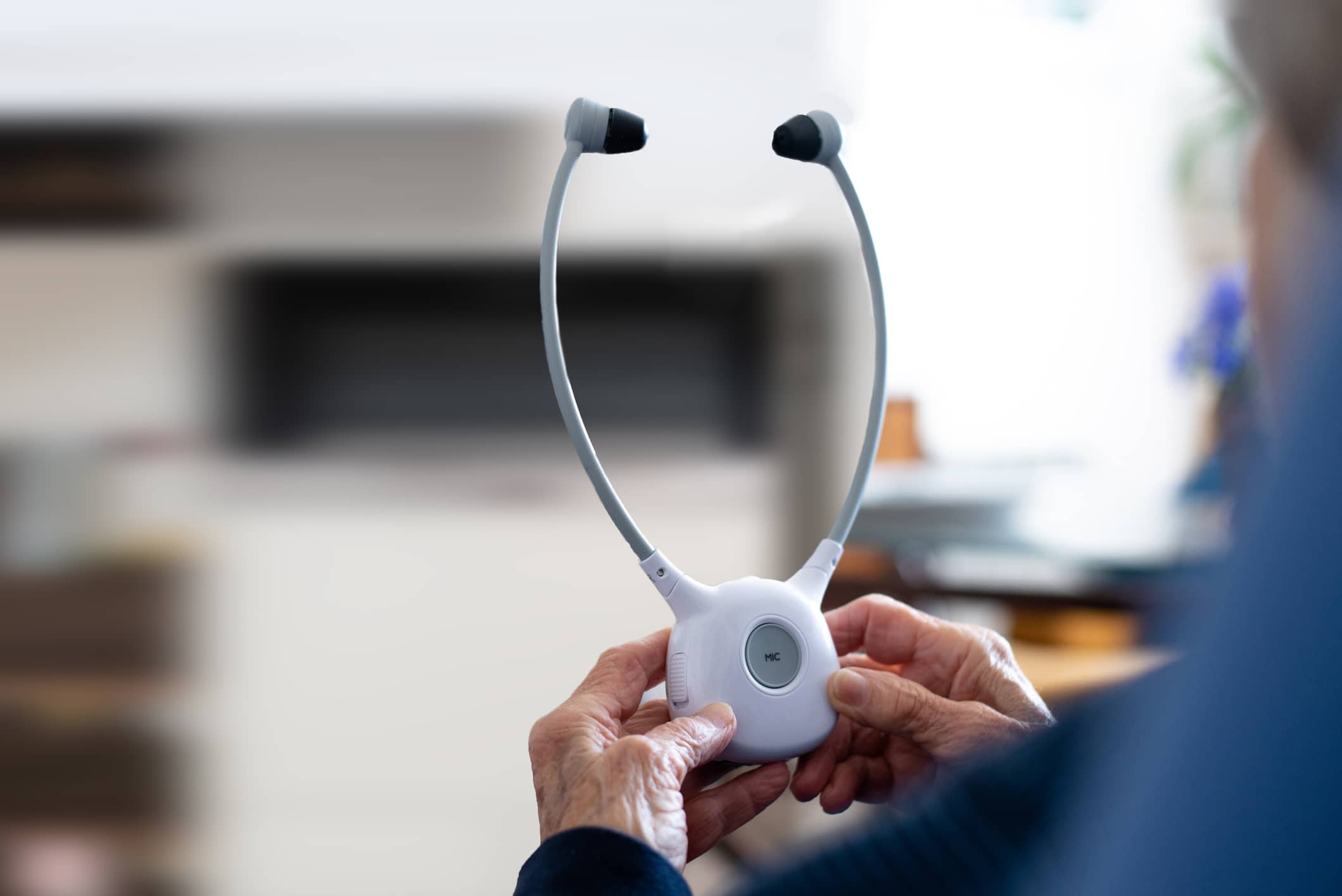
Arcom's mission in the field of audiodescription derives from the French law no. 86-1067 of September 30, 1986 on freedom of communication, amended by the law of March 5, 2009 on audiovisual communication and the new public television service: 5° ter of article 28 (television services shown by terrestrial hertzian means), I of article 33-1 (other television services), I-4° of article 33-3 (SMAD), article 56-1 (public service channels).
The latter requires public TV channels and private channels whose national audience exceeds 2.5% of the total audience for TV services, to make provision in their agreements for a proportion of programs accessible to blind or partially-sighted people, particularly during peak listening hours.
Furthermore, article 20-6 of the law of September 30, 1986, created in December 2020 as part of the transposition of the new European AVMS directive, stipulates that in addition to the volume of accessible programs, Arcom must ensure the quality of this accessibility. While this aspect is now enshrined in law, the Authority has long taken account of the public's needs in this area, and in 2008 signed an initial charter on the quality ofaudio description. In 2020, it is publishing a new reference document: "Guide de l'audiodescription - Principes essentiels, outils d'évaluation et bonnes pratiques professionnelles".
Audiodescription makes television programs accessible to blind and partially-sighted people. To achieve this, the events that appear on screen are described, clearly and succinctly, between the dialogues or comments in the program. Audio description provides explanations, descriptions of people, their feelings and details of the action being filmed.
A great deal of writing is required to produce an audio description, which makes it impossible to audio-describe live programs. Programs that can be the subject of audio description are essentially cinematographic and audiovisual works, whether dramas or documentaries.
2008, a first charter
In 2008, to ensure the quality of audio descriptions offered on TV channels, a charter was drawn up by professionals, under the aegis of the interministerial delegation for the disabled. The aim of this charter was to provide a managerial frame of reference for professionals, with precise rules of quality and ethics to guarantee a result that satisfies both creators and users.
2017, publication of a study on monitoring compliance with and the quality of channels' obligations in terms of program accessibility.
In the aftermath of the November 13, 2015 attacks, the French Superior Audiovisual Council (which became Arcom on January 1, 2022) had been approached by numerous associations about the lack or poor quality of accessibility of programs that had covered these events. On November 26, 2015, it announced in a press release that it would carry out control operations over the course of 2016 on all audiovisual accessibility obligations to verify compliance and quality. He also specified that the results of this study would be made public, and that if any shortcomings were found, he would not fail to intervene with the channels concerned to ensure that they were not repeated. This commitment was repeated offence at the meeting of the Commission nationale culture et handicap (CNCH) on January 27, 2016. The results of the study were published on April 19, 2017, on the French Superior Audiovisual Council website.
The study was based on three modes of control and analysis:
The five findings were as follows:
Following the publication of this study, in July 2017 the French Superior Audiovisual Council organized a cycle of hearings dedicated to the accessibility of programs for blind or visually impaired people in the presence of authors, TV channels, associations and laboratories. Overall, representatives of associations and authors became aware of the need to redefine a manager for new entrants to the audiodescription sector, but also for channels who need to have a tool, recognized by all, enabling them to assess the quality of the audiodescription they offer.
Also, since June 2018, numerous working meetings have taken place between audiodescription authors, representatives of the visually impaired public (the Confédération Française Pour La Promotion Sociale Des Aveugles Et Amblyopes (CFPSAA) and its panel) and blind or visually impaired collaborators writing audiodescription versions.
2020, publication of a new reference document on audiodescription quality
This document, "Guide de l'audiodescription - Principes essentiels, outil d'évaluation et bonnes pratiques professionnelles" aims to set out the essential principles of quality audio description, to provide tools for evaluating audio description and to report on existing good professional practice in this field.
It is aimed not only at audiovisual media using audio description, but also at audio describers, audio description agencies and any other players (production companies, associations, etc.) involved in or summoning up audio description.
To find out about the availability of audio description on certain free-to-air DTT channels, as well as on the free-to-air sections of the Canal+ pay channel, browse the links below.
Reception may come under the control of the adapter or decoder you use. These readings were taken primarily during the 8:30 pm to 10:30 pm time slot, when films are shown.
DTT offers two techniques for digital diffusion of audio description:
This technique involves pre-mixing the program's main audio component and the scene description at the diffusion center or at the coding head-end. In digital diffusion, the audio component pre-mixed using this technique is coded as a "classic" sound component. The "broadcaster-mix" mode generally requires a bitrate ranging from around 100 kbit/s to 256 kbit/s, depending on the type of coding used (MPEG-1 Layer II, AC3, E_AC3, HE-AAC). Such a pre-mix bit rate is necessary to guarantee clear listening to audio description.
At the receiving end, the viewer must select the pre-mixed audio description component rather than the usual sound component of the program. In this case, no additional decoding equipment is required at the DTT receiver, but the viewer cannot adjust the volume of the scene description passages. This solution is immediately compatible with the majority of DTT receivers currently in use.
In receiver-mix mode, only the scene description audio component is shown in addition to the main audio component on correctly equipped DTT receivers. A mix between the program's main audio component and the scene description is produced at the receiver - or even deported to ad hoc headsets - for the sole benefit of blind or partially-sighted viewers.
This technique, used on DTT in the UK for example, requires additional functionality in the receiver. It has been standardized by the ETSI (European Telecommunications Standards Institute) and is considered by the EBU (European Broadcasting Union) to be a good approach to carrying an audio description signal. In fact, this technique is more efficient in terms of bit rates, and therefore in terms of occupying terrestrial resources.
Arcom's DTT signaling profile precisely describes the technical characteristics of these two audio description broadcasting methods. This document enables all players in the sector (publishers, broadcasters and receiver manufacturers) to set their equipment so that the signals diffused are correctly performed by the receivers deployed or on sale.
| Chain | Minimum obligation in 2019 | Program shown (by number) in 2019 |
| France Télévisions | 1000 programs per year | 2074 programs, including 748 new ones |
| TF1 | 100 programs of which 55 new | 268 programs, including 102 never-before-seen |
| Canal+ | 100 new programs | 269 programs of which 194 new |
| M6 | 100 programs including 55 never-before-seen | 387 programs, including 114 never-before-seen |
| C8 | 22 new programs | 50 programs, including 23 never-before-seen |
| W9 | 22 new programs | 124 programs including 32 never-before-seen |
| TMC | 22 new programs | 41 new programs |
| TF1 Séries Films | 12 new programs | 35 new programs |
| L'Equipe | 12 new programs | 10 programs, including 10 never-before-seen |
| 6Ter | 12 new programs | 223 programs, including 28 never-before-seen |
| RMC Story | 24 new programs | 32 programs including 28 new ones |
| RMC Découverte | 12 new programs | 39 programs, including 12 never-before-seen |
| Chérie 25 | 12 new programs | 64 programs, including 14 never-before-seen |
| LCI | 1 program per week (7am-9am or 6pm-11pm) | 72 new programs |
On April 19, 2017, Arcom published a study on monitoring compliance with and the quality of channels' obligations in terms of program accessibility, which pointed to the need to overhaul the charter relating to audio description dating from 2008; the latter did not address many points that were nonetheless essential to the production of quality audio description.
In terms of television program accessibility, Arcom's mission stems from law no. 2005-102 of February 11, 2005 for equal rights and opportunities, participation and citizenship for disabled people , which inserted several paragraphs at law no. 86-1067 of September 30, 1986 on freedom of communication. Over and above these legal requirements, Arcom, which is committed to taking ever greater account of the public's needs in terms of access to programs, signed three charters in 2008, 2011 and 2015 concerning the quality of audio description, subtitling and French Sign Language, respectively.
Charters
The audiodescription guide was drawn up, under the aegis of Arcom, by audiodescription authors, representatives of visually impaired audiences (the Confédération Française Pour La Promotion Sociale Des Aveugles Et Amblyopes(CFPSAA) and its panel) and blind or visually impaired collaborators writing audiodescription versions.
This collaborative work, which began in 2018, has resulted in the drafting of a guide: "Guide de l'audiodescription: principes essentiels, outils d'évaluation et bonnes pratiques professionnelles".
The aim of this guide is to set out the essential principles of quality audiodescription, to provide tools for assessing audiodescription and to report on existing good professional practices in the field. It is aimed at audiovisual media using audio description, but also at audio describers, audio description agencies and any other player (production company, association, etc.) participating in or summoning audio description.
Download below (pdf format.) the Audiodescription Guide: essential principles, evaluation tools and best professional practices.

Since June 28, 2025, the law has entrusted Arcom with the task of ensuring compliance with a certain number of obligations relating to the accessibility of the services of publishers and distributors of audiovisual communication services providing access to audiovisual media services.
The law entrusts Arcom with the task of ensuring compliance with a certain number of obligations relating to the accessibility of digital services, i.e. websites, mobile applications, intranets, etc.
The directive on accessibility requirements for products and services, dated April 17, 2019, makes provision for digital books and specialized software published with effect from June 28, 2025 to be natively accessible.
On February 11, 2014, under the impetus of Arcom, a charter aimed at fostering the training and professional integration of disabled people in the audiovisual industry was signed by audiovisual schools, audiovisual companies, the Ministry responsible for Disabled People and Fighting Exclusion and the regulation authority. The aim of the charter is to create a pool of professionals available to the media.
TV channel, radio station or school disability representatives are Arcom's key managers for the application of this charter. He or she is a member of the Authority's Monitoring Committee.
TF1 Group :
Céline Gaxatte
France Télévisions Group :
Yannick Monsnereau
yannick.monsnereau@francetv.fr
Canal + Group :
Jaleh Bradea
M6 Group :
Virginie Rucheton
Altice Médias Group :
Jules Neutre and Alix de Montesquieu
Lagardère Group :
Véronique Ghisleri
NRJ Group :
Elodie Joly
Radio France Group :
Véronique Vone
Veronique.VONE@radiofrance.com
France Médias Monde Group :
Lucie Liborio
L'Equipe 21 :
Margot Blanchard